Every ambient system creates a threshold. The brands that design it will own the relationship. The ones that don't will inherit the anxiety.
AI is finally making good on a decades-old ambition: computing that fades into the background of daily life. Ambient systems were always meant to work this way, sensing and responding without being asked. For most of that history, they were too simple for their invisibility to matter much. That's no longer true, and the physical layer these systems live in hasn't caught up yet.
The reason was simple. Previous ambient systems were responsive but not sophisticated. A smart thermostat could react to temperature. A motion sensor could trigger a light. These systems could detect and respond, but they could not infer context, personalise behaviour, or act at scale without direct instruction. Which meant the stakes of their invisibility were relatively low. A thermostat you cannot see is a minor inconvenience. You can still find the dial.
AI changes this not by making ambient systems possible, but by making them vastly more consequential. Current AI systems cannot exercise judgement in any meaningful sense. They do not understand. But they can infer patterns across enormous datasets, personalise behaviour in real time, generate outputs that feel responsive to context, and act on your behalf in ways that produce real consequences without the system having any comprehension of what it is doing. The behaviour may look like intelligence. It is something more opaque, and in some ways more unsettling.
A system that behaves as though it is making decisions, while actually doing something far less legible, creates a particular kind of unease. It looks like agency. It isn't. And users can feel the difference.
This gap, between the appearance of intelligent behaviour and the reality of a system that infers without understanding, is what makes the physical threshold so important now. When ambient systems were simple and reactive, people could intuit what they were doing. The cause and effect was legible even if the technology wasn't visible. AI-powered ambient systems break that intuition. They act in ways that feel purposeful but follow no logic a user can reconstruct. The system appears to know things. It appears to be acting on your behalf. Whether it is, and on what basis, is rarely clear.
For thirty years, designers and technologists have been working toward the same vision: technology that disappears. Embedded in environments, responsive to presence, operating beneath the threshold of conscious attention. Ambient, in the fullest sense of the word. The vision was compelling. The execution, for most of that time, was limited.
These are threshold moments, moments at which a system enters someone's environment, attention, or decision-making in ways they may not have explicitly invited. And they are multiplying. What happens at the threshold determines whether that relationship is one of trust or of low-grade unease. For the most part, the industry is not designing them. The threshold is undesigned, not invisible by choice. And undesigned thresholds produce the defining anxieties of the current AI moment: the sense of being observed without understanding by what, the uncertainty about what a system has inferred, the inability to locate the edges of something with no visible form.
Privacy concerns, always-on anxiety, the erosion of felt control; better onboarding or cleaner terms of service won't resolve any of it. These are threshold problems. They are what happens when consequential systems enter people's lives without a physical presence that makes that entry legible.
The physical object is not an inheritance from an earlier era of technology. It is the threshold of the next one and it has never mattered more.
For decades, physical objects carried this responsibility without anyone naming it. A dial communicated control. A button confirmed registration. A device that sat on a surface declared its presence, bounded, locatable, in some sense accountable. Threshold design, not decoration: the mechanisms by which people understood what a system was doing, whether to trust it, and what kind of relationship they were in with it.
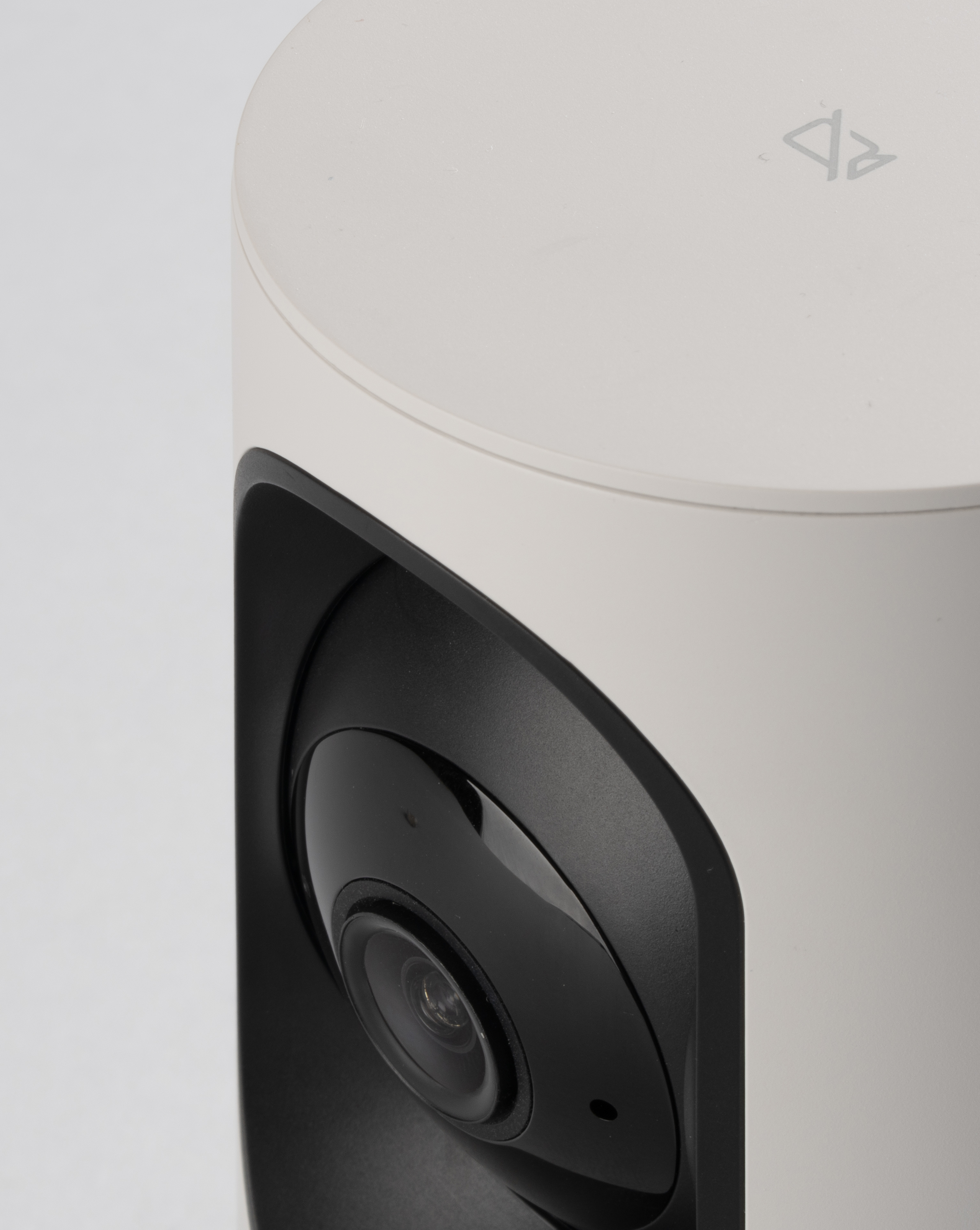
The challenge now is to design that threshold deliberately, for systems far more capable and far less legible than anything that required it before. This means a new category of physical object, one built to hold the threshold rather than perform a task. That signal when a system becomes active. That make state visible without demanding attention. That give people something to locate, to hold, to switch off. Objects whose form answers the questions that powerful ambient systems inevitably raise: is it on? What does it know? Who is in control?
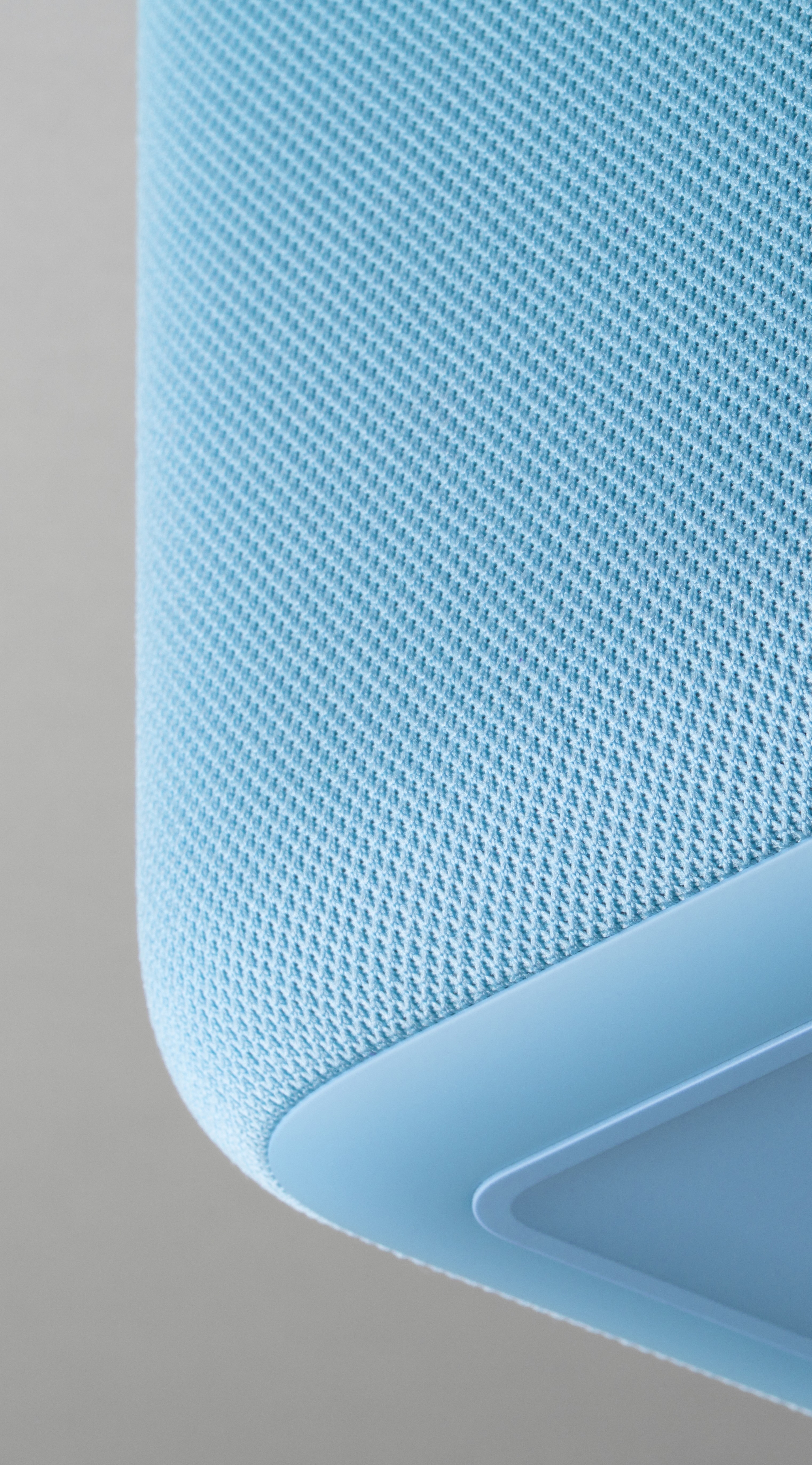
Call these Threshold Objects. The category is nascent and largely unintentional: the Amazon Echo's light ring animating to signal Alexa's awareness, Philips Hue's SpatialAware scenes, which read a room and shape the light to fit it, and the capture LED on Meta's smart glasses, there mainly because a recording device worn on the face needs some way to signal to the people around it that it's active. These are threshold gestures, not threshold designs. None of them fully work. Most arrived without a theory. But they point toward something real.
What is needed now is deliberate practice. Designing a Threshold Object starts with relationship, not function or form. What does it mean to enter this system's field of activity? What should crossing that threshold feel like, for the user, not the system? Who controls the crossing, and how does the object make that legible? These are questions that software-first product teams are not naturally equipped to ask. They require designers who understand both the physical and the relational, who can work at the point where consequential systems and human lives actually meet.
The commercial stakes are not subtle. Trust is the scarce resource of the AI era. Systems people cannot see, locate, or switch off won't earn that trust automatically. Objects can, because they have edges, presence, and a quality of accountability that inferred behaviour alone cannot manufacture. The brands that invest in the physical threshold with the same rigour they bring to the intelligence behind it will define what living and working with ambient AI actually feels like.
The ones that leave the threshold undesigned will find that their users are crossing it anyway. They just won't know on whose terms.
Threshold Objects are physical artefacts that make the presence, state, and boundaries of an ambient AI system legible.