


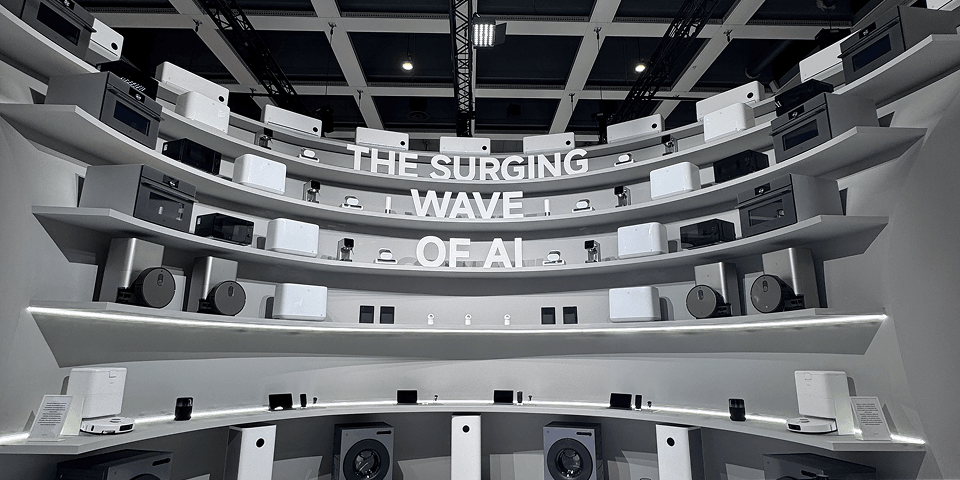
IFA Berlin’s organisers set this year’s official theme as "The Future Is Now." It’s broad enough to span everything from smart home to mobility to content creation. What we identified, reviewing more than 1,900 exhibitors, was a much more specific pattern sitting underneath that broad theme: artificial intelligence moving out of the chat window and into physical products, homes and daily life, independently of any brief from the organisers.
That's the real story of this year's show, and where we focused this report. Underneath the official theme, we tracked a more specific, more design-relevant question running through nearly every hall we visited: not whether a product has AI, but what body that AI gets, and what job that body is meant to do.
We’re calling that underlying question The Body Problem. This report sets out the six archetypes we saw manufacturers independently arriving at as their answer, the design tensions running underneath them, and what we think it means for product and industrial design practice over the next 12–18 months.
For most of the last three years, the competitive question in consumer hardware has been "who has AI." At IFA 2026, that question is essentially answered - nearly every exhibitor we saw could say yes, in some form. What’s replaced it is a harder and more interesting question: what body does the AI get, and what job is that body meant to do.
None of the underlying capabilities are new. Local processing, environmental sensing, voice interaction and biometric tracking have existed for years. What's new is the convergence: multiple, often unrelated companies fusing these capabilities into single-purpose hardware within the same several-month window.
That's not a software question. It's a question about the physical relationship between a person and an object , the kind of question industrial designers, are best placed to answer. And right now, nobody has a settled answer. We watched companies arrive at completely different physical solutions to what is functionally the same brief.
We grouped what we saw into six recurring archetypes. Each represents a distinct bet on where AI should physically live, and each has real, working products behind it - this is not speculative. The rest of this report sets them out, the tensions running underneath them, and what we think they mean for our own practice.
1. The Home Brain: a new appliance category fusing AI compute, storage and smart-home control.
2. The Wearable Witness: capture-first hardware that senses, understands and acts - forking hard by purpose.
3. The Anthropomorphic Companion: AI given a face, a voice persona, or a body that moves through a room.
4. AI as Hands: existing AI models given physical agency over hardware you already own.
5. The Passive Sensor: measuring the body and the room quietly, with no persona and no wake word.
6. The Deliberate Refusal: products designed explicitly without AI, cameras or screens.
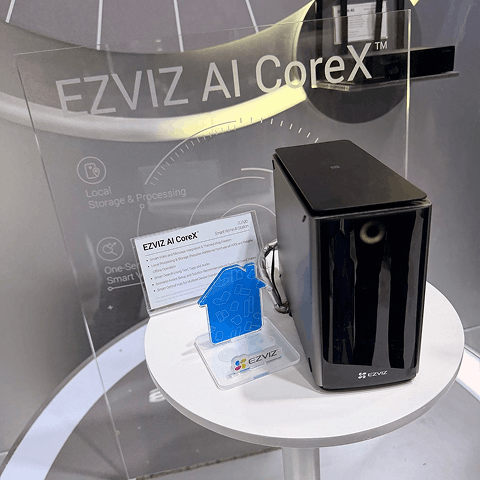
Home AI hubs emerged as a new category at the show, replacing what used to be three separate boxes (router-adjacent hub, NAS, cloud subscription) with one. Several manufacturers arrived at near-identical concepts within months of each other, with no shared origin, but converged on nothing when it came to shape: sealed single units, paired boxes, and bring-your-own-drive enclosures were all being tried at once.
The genuinely new element isn't local processing itself (that's existed for years); it's a full on-device AI agent with meaningful compute living in a dedicated home appliance. What's unresolved is the physical architecture, and at least one major lighting brand chose to stay a neutral, protocol-agnostic hub rather than build a proprietary AI brain at all: a legitimate bet that interoperability still beats vertical integration.
(Image Description)
1.Home Agent - Ugreen AI hub/brain platform, in the samecategory as MindBase rather thana peripheral to it.
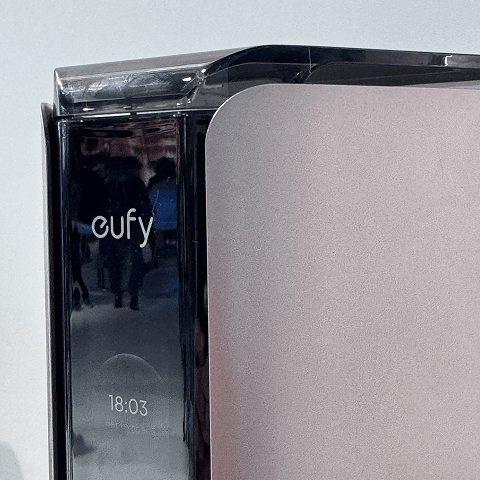
2. Anker MindBase — Anker: Sealed single-box home AI hubbuilt on three named pillars (crossdevice connectivity, an on-deviceAI agent, local secure storage),positioned as a whole-home AIbrain.
3. EZVIZ AI CoreX — EZVIZ "Smart"Smart Home AI Station" running aproprietary large model fully ondevice, but requiring the user tosupply their own hard drive,
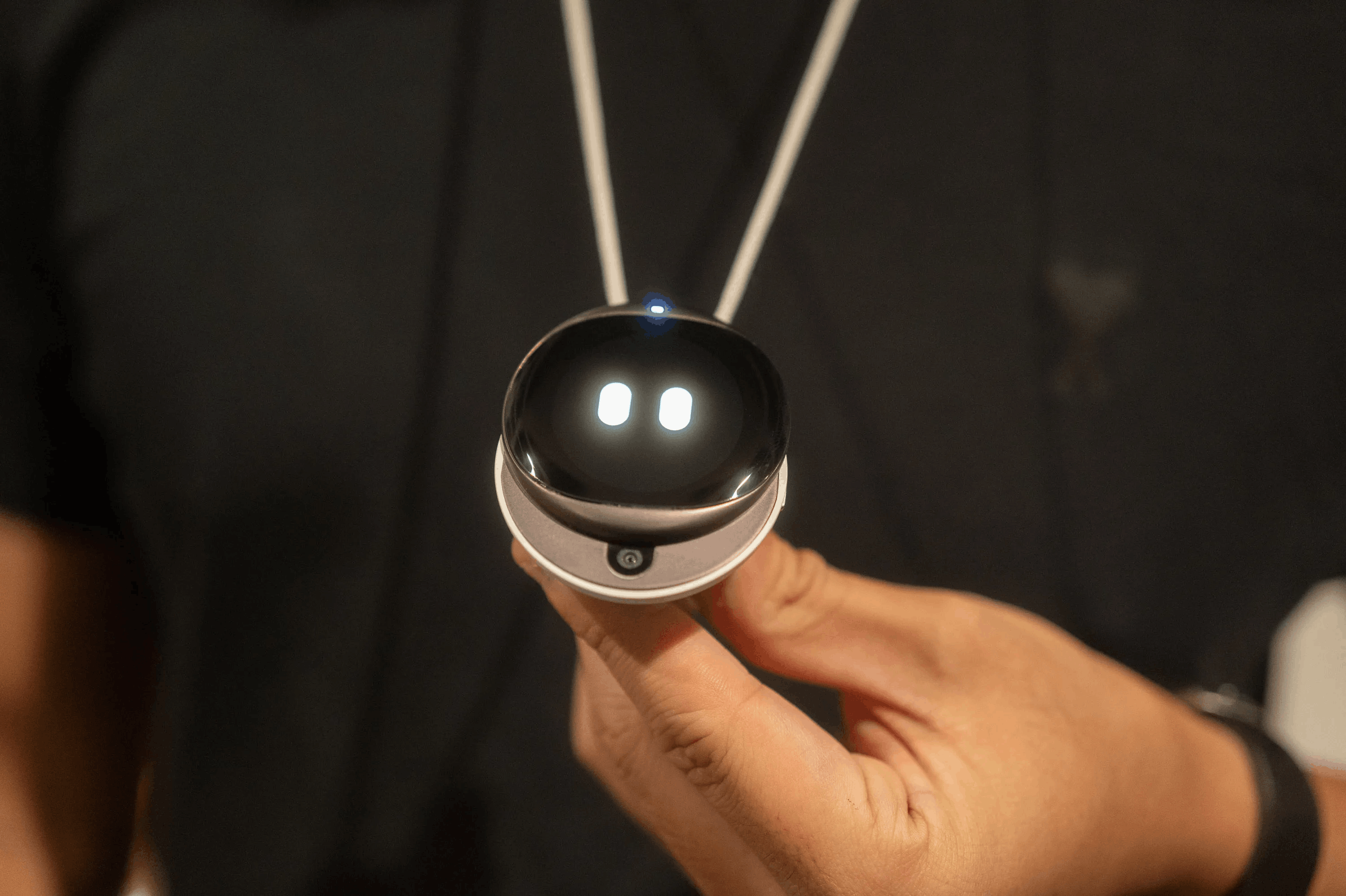
This was the single most crowded archetype at the show, andit is already forking hard by purpose. Productivity earbudstranscribe meetings and draft follow-up emails; personalmemory pendants are pitched on reflection and presencerather than output; a pendant automatically logs food intakevia camera and motion cross-validation; and screenless bandsfuse body sensing with environmental sensing, competingexplicitly on having no subscription fee.The productivity and personal-memory sub-categories useidentical hardware logic — capture, then interpret — butoccupy opposite emotional registers. At least two well-fundedcompanies converged on the same language, "listen, think,act," independently and weeks apart. That divide is likely tosharpen rather than blur.
(Image Description)
1. Plaud One, Plaud- earbuds witha case that doubles as an eSIMconnected room mic; records,transcribes, summarises andpushes into Gmail, Calendar,Notion and Slack
2. iKairos, Lingverse, — Awearable "Pin" pendant plus adesk-dock "Foundation" with anexpressive face; captures by day,reflects with the wearer by night.Framed as memory, notproductivity.
3.ODYSS N1 — ODYSS” The firstAI dietary necklace that endsmanual food logging." A pendantthat cross-validates camera andmotion data before logging meals.
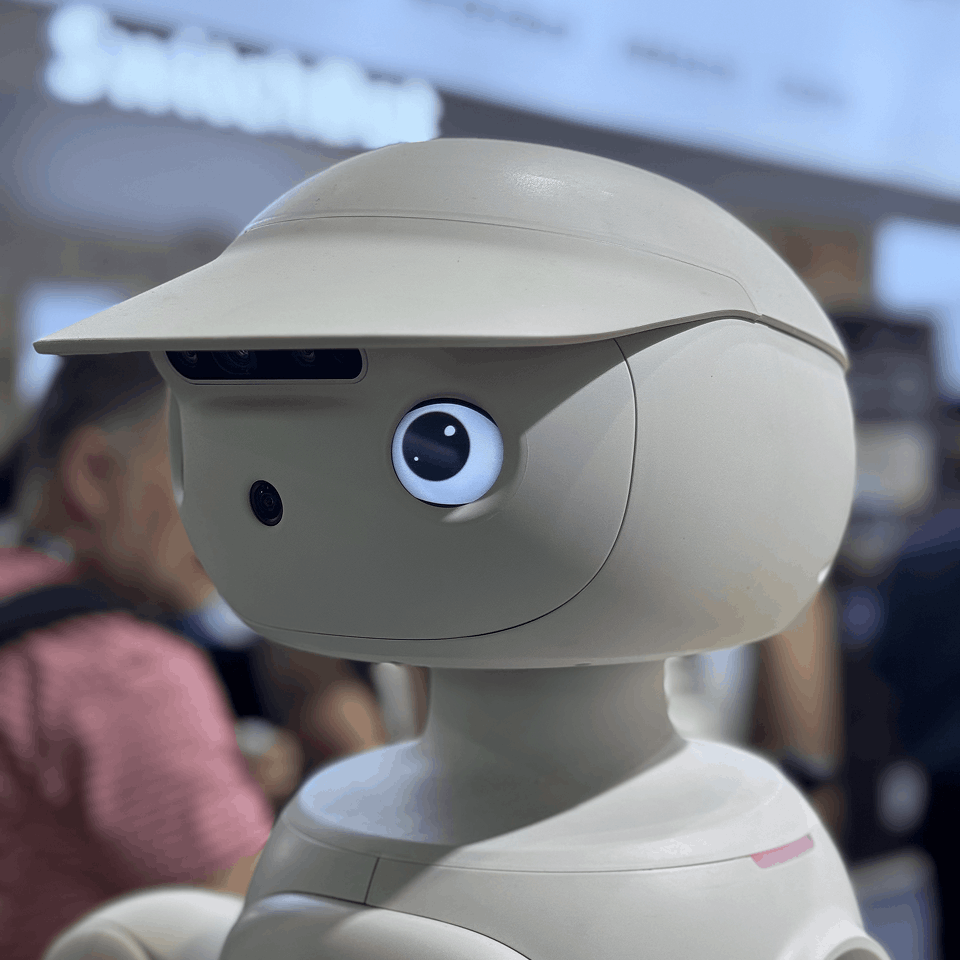
This archetype was executed at wildly different price points: amobile companion robot retailing under £175 in its homemarket, an edge-AI concierge on dedicated silicon withselectable personas, and a wearable-plus-dock pairing builtaround a day/night ritual of capture and reflection.It is the most design-forward and the most commerciallyunproven of the six, and the place where legacy socialrobotics thinking is most visibly re-entering the market. Jibo,the pioneering social robot, shut down commercially in 2019;its alumni are now building recognisably the same categoryagain, at more than one company, with meaningfully betterhardware underneath them than the original ever had.Whether the market has actually changed since then, or onlythe silicon has, is the open question hanging over everyproduct in this section.
(Image Description)
1. Moii H1 -Hisense - Mobilehome-companion robot. It patrols,video-calls, follows and respondsto "Hey Moii.
2.Stella Deck- Integrit Inc Billed as"the industry’s first Physical AIinterface": a screen-on-a-swiveldesktop device offering selectable"AI Human" personas for homeautomation, security and wellness
3. iKairos Foundation dock —Lingverse EZVIZ"Smart Home AIStation" running a proprietary largemodel fully on-device, butrequiring the user to supply theirown hard drive, NAS-style.
Rather than putting AI in a new object, this approach gives anAI model you already use physical agency over hardware youalready own.One product we saw connects to any computer via HDMI andUSB-C, watches the screen, and operates keyboard andmouse directly, letting a user's own choice of AI model (not aproprietary one) operate any application, modern or legacy,without needing an API.A second, adjacent product takes a lighter-touch version of thesame idea: a physical dial-and-voice controller for switchingbetween AI coding tools, rather than an actuator for the screenitself.It's a meaningfully different design problem from the other fivearchetypes: the object is not a companion or a sensor, it is anactuator, or a controller for one, and local-first architectureplus a physical kill switch were treated as non-negotiable trustfeatures, not optional extras.
(Image Description)
1 . WhisPrompt - A lighter-touchtake on the same idea: a physicaldial-and-voice controller forswitching between AI codingassistants, rather than an actuatorfor the screen itself.
2 . Violoop - BVIO Technology , Apalm-sized device that connectsto any Mac or PC via HDMI andUSB-C, watches the screen, andoperates keyboard and mousedirectly. Bring-your-own-AI viaChatGPT, Claude, Gemini orCodex, with a physical kill switch.Explicitly framed as solving "AI hasa brain but no hands
A quieter, more mature category with no conversational layer,no persona and no wake word. Medical-grade homediagnostics (urine and vital-sign scanning integrated intoexisting fixtures), standalone indoor air, light and noisemonitors, and mood-driven ambient lighting systems all fallhere.These products extend an existing quantified-self orconnected-health thesis outward into the environment, ratherthan adding a new AI-agent narrative on top of a category thatalready had a working, trusted design language of its own.Unlike almost everything else in this report, none of them leanon a persona, a wake word, or "AI-powered" branding to sellthemselves. They compete on doing one physical job well,which makes this arguably the least hyped and most durablecategory at the show.
(Image Description)
1.DaySync - Govee , Ambientlighting that auto-syncs to time ofday and local weather, framedaround wellness and"reconnecting with the naturalworld" rather than infrastructure.
2. Beamo Withings —A multisensor handheld combining adigital stethoscope, thermometer,oximeter and ECG into one swipestyle device.
