


The AI capability gap is accelerating.
A proximity sensor demonstration showcased headcount tracking, location zones, height detection. Automation that turns the TV on when you lie down—but not after 9pm.
The presentation focused on technical capabilities. Not whether people actually want their home second-guessing their intentions.
Ambient AI demonstrations showed superior reasoning. Context-aware responses. Background intelligence. The trade-off became clear: sophisticated reasoning requires cloud processing. Latency increased noticeably.
Integration numbers dominated announcements. I walked the floor looking for whether connectivity created actual value.
A smart scale measures 60 biomarkers through foot sweat. Subscription-based pattern detection for longevity. I kept asking: will people stand on this scale every morning for data they don't have symptoms about? Nobody had tested sustained engagement. Preventative tools require discipline for future value. That's behaviour change, not technology.
Products can't communicate value without technical explanation. The gap between what technology can do and what people actually use isn't closing. It's accelerating.
What are you building from—your algorithm's capabilities or your users' friction points?
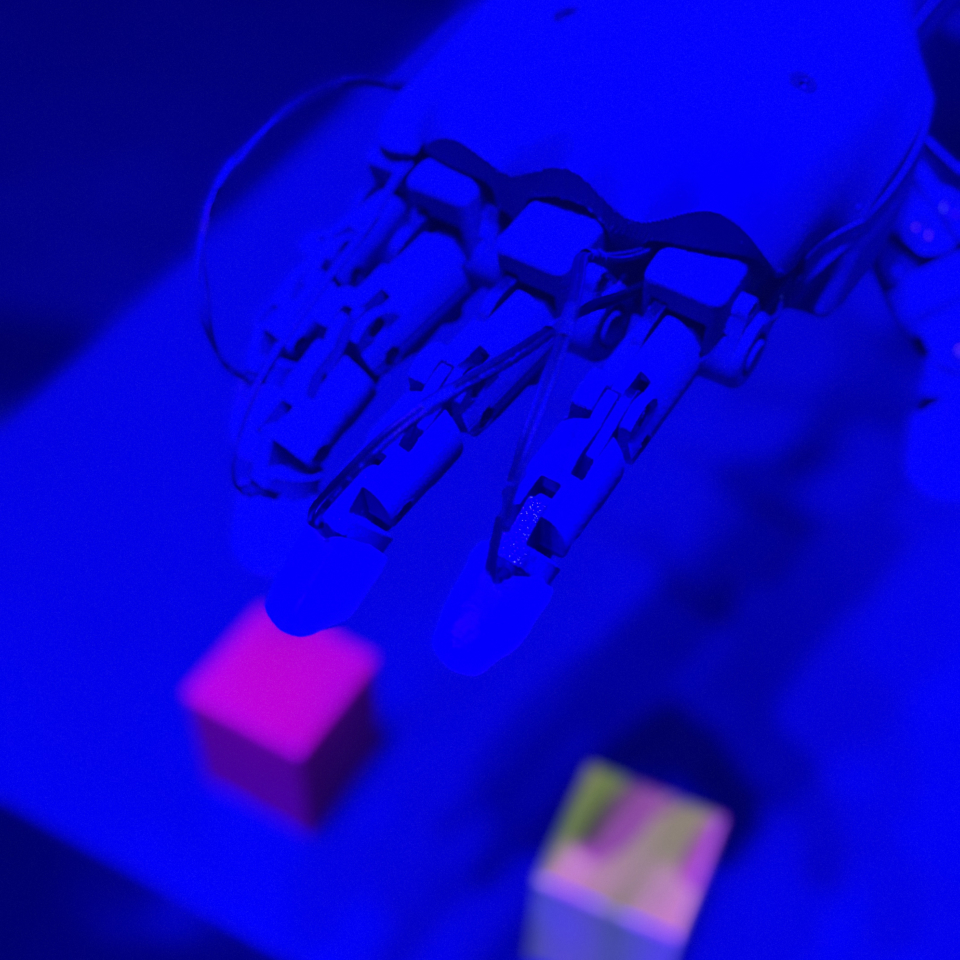
I saw the widest range of robotics form factors yet. One robot prioritising force sensing, perception, and compliance over raw speed for human spaces. Another treating stairs as a physical problem rather than a software one.
Every demonstration led with specs. Force sensing. Degrees of freedom. Perception compliance.
I asked the same question at each stand: what happens when your robot encounters something beyond its programming? How does it signal uncertainty? When does it ask for help? How does a person know it has registered their presence before it moves?
Nobody has solved this yet.
These are not engineering questions. They are design questions that determine whether deployment succeeds or stalls. The robotics industry has been saying robots everywhere for five years. I watched technical capability prove itself repeatedly. Deployment strategy has not kept pace.
The winners will not be those with the most sophisticated algorithms. They will be those who have invested as much in trust architecture as mechanical engineering.
Years of design investment have produced codified design languages. Major platforms maintained consistent design DNA across their product families at CES. The maturity shows.
But connectivity standards have changed the rules. Standards like Matter enable consumers to mix products freely across ecosystems. Technically compatible. Experientially incoherent.
Two futures are possible. Brands converge towards compatible design languages, achieving interoperability at the cost of differentiation. Or they maintain distinctive DNA and create fragmented experiences when consumers mix. Neither resolves the tension.
Some consumers want curated coherence. Others want best-of-breed flexibility. Both are valid. The technology enables choice. The business models assume coherence. Something has to give.
The design investment question that CES left unanswered: how do you build for ecosystem coherence when consumers can choose across your boundaries?
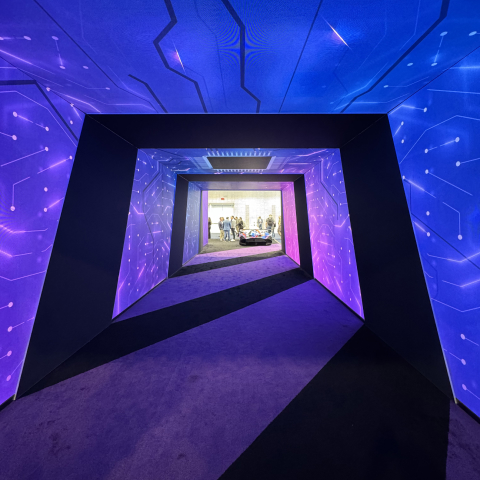

CES 2026 tested three hypotheses. All three confirmed the same thing.
Technical capability is no longer the constraint. Deployment strategy is.
Ambient AI works but creates latency trade- offs nobody's tested with users. Robotics proves itself technically but hasn't built trust architecture. Connectivity standards succeed but create design strategy questions brands haven't answered.
The implementation gap isn't closing. It's becoming the competitive frontier.
The companies that win won't be the ones with the most sophisticated technology. They'll be the ones who understand that deployment requires different thinking than development.
Understanding friction points before building solutions. Designing trust alongside capability. Creating coherence when open standards enable chaos.
The technology is more ready than ever. The deployment thinking isn't.
